This course aims to comprehend the philosophy of the Indian Constitution, the Historical background of the Indian Constitution, objectives of the Indian Constitution through the Preamble and the provisions relating to fundamental rights and citizenship. The purpose of the course is to acquaint the students with the Basic Postulates of the Constitution like the Constitutional Supremacy, Rule of law, and Concept of Liberty. It further aspires to fathom the conceptually crafted Directive Principles of State Policy and Fundamental Duties. To develop amongst the students practical understanding of Constitutional provisions and to augment critical thinking skills related to the Constitution and various authorities and to give them a picture of Constitutional Parameters regarding the organization, Powers and Functions of the various Organs of the Government. The emphasis is also on the study of the nature of federal structure and its functioning. A critical analysis of the significant judicial decisions is offered to highlight judicial restraint, judicial passivity, judicial activism and judicial balancing. The students will be able to articulate their independent views over contemporary crucial constitutional issues. The course intends to provide students with tools for identifying Constitutional issues that may arise so that the issues can be anticipated and averted through proper planning and legal recourse. The course will also rely upon the legal case study method as a learning strategy for understanding the key principles of constitutional law. The course deals with both interpretation and implementation of the Indian Constitution.
Course Outcomes:
After completing this course, the students will be able to understand:
The Historical background and salient features of the Indian Constitution.
Concepts of Federalism and Secularism.
The importance of Preamble and various concepts envisaged under the same.
The definition of State with special reference to Fundamental Rights.
The importance of Fundamental Rights, Directive Principles of State Policy and Fundamental Duties and their justiciability and non–justiciability.
Implementation of Fundamental Rights through Articles 32 and 226.
Module 1
1.1- Philosophy of Constitution.
Constitution as a basic norm.
Concept of Rule of Law and Constitutionalism.
Constitution as a living document.
Forms and Models of Constitution.
1.2- Historical Background and Framing of the Indian Constitution.
Legal system during East India Company‘s Rule in India.
Legal system during British Crown‘s Rule in India.
Mountbatten‘s Plan 1947 and Indian Independence Act 1947.
Framing and drafting of Indian Constitution by Constituent assembly.
1.3- Preamble:
Socio-Legal Concepts under Preamble.
Preamble as a tool to interpret the Constitution.
Judicial Pronouncements on Preamble.
1.4- Salient Features of the Indian Constitution:
1.5- Provisions Relating to Citizenship and Citizenship Act 1955 (Part II).
Module 2
2.1- Origin, Purpose and Significance of Fundamental Rights.
Article 12- Definition of State and concept of State Instrumentalities and agencies.
Article 13 -Judicial Review, Pre-constitutional and Post Constitutional Laws, Doctrine of Ultra Vires, Doctrine of Eclipse, Doctrine of Severability and Doctrine of Waiver.
2.2- Article 14-18 – Right to Equality.
2.3- Article 19 – Six Fundamental Freedoms and Reasonable Restrictions.
2.4- Fundamental Rights under Articles 20 and 22.
2.5- Article 21 and 21A – Right to Life and Personal Liberty & Right to Education.
Module 3:
3.1- Article 23 and 24 – Right against Exploitation.
3.2- Article 25-28 – Right to Religion.
3.3- Article 29 and 30 – Rights of Minorities.
3.4- Article 32- Right to Constitutional Remedies and Public Interest Litigation.
3.5– Saving of Certain Laws – Article 31, 33, 34, 35. 56
Module 4:
4.1. – Directive Principles of State Policy.
Relationship between Directive Principles of State Policy and Fundamental Rights
Judicial and Legislative trends on Directive Principles of State Policy.
4.2 – Historical Background of Fundamental Duties Fundamental duties under the Constitution
4.3 – Judiciary – Supreme Court, High Court (Part V, Chapter IV and Part VI Chapter V)
4.4 – Tribunals (Part XIVA), Official languages (Part VII), Miscellaneous Provisions (Part XIX) and Commencement, Authoritative Texts and Repeals Part XXII
Suggested Readings:
H.M. Seervai, Constitutional Law of India, Law and Justice Publishing Company
M.P. Jain, Indian Constitutional Law, Lexis Nexis
Narendra Kumar, Constitutional Law of India, Allahabad Law Agency
J.N. Pandey, Constitutional Law of India, Central Law Agency
P.M. Bakshi, The Constitution of India, Butterworth Lexis Nexis
D.D. Basu, Introduction to the Constitution of India, Lexis Nexis
Subhash Kashyap, Constitution of India, National Book Trust
Dr. Suresh Mane, Indian Constitutional Law, Dynamics and Challenges, Aarti & Co.
Mahendra Pal Singh, V. N. Shukla‘s Constitution of India, Eastern Book Company
Writings and speeches of Dr. Baba Saheb Ambedkar by the Government of Maharashtra
Arvind Datar, Commentary on the Constitution of India, Lexis Nexis, 2010
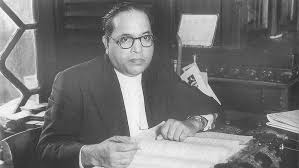
“The Constitution is not a mere lawyer’s document, it is a vehicle of life, and its spirit is always the spirit of the age.
― Dr. B. R. Ambedkar
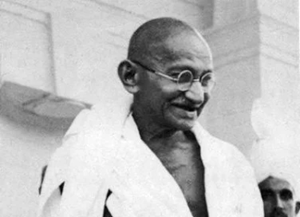
“I learnt my duties on my mother’s lap. She was an unlettered village woman…She knew my dharma. Thus if from my childhood we learn what our dharma is and try to follow it our rights look after themselves… The beauty of it is that the very performance of a duty secures us our right. Rights cannot be divorced from duties. This is how satyagraha was born, for I was always striving to decide what my duty was.”
― Mahatma Gandhi
“I know no safe depository of the ultimate powers of the society but the people themselves; and if we think them not enlightened enough to exercise their control with a wholesome discretion, the remedy is not to take it from them, but to inform their discretion by education. This is the true corrective of abuses of constitutional power.”
― Thomas Jefferson
“Don’t interfere with anything in the Constitution. That must be maintained, for it is the only safeguard of our liberties.” ― Abraham Lincoln
“The strength of the Constitution lies entirely in the determination of each citizen to defend it. Only if every single citizen feels duty bound to do his share in this defense are the constitutional rights secure.”
― Albert Einstein
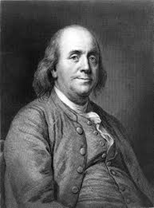
“The Constitution only gives people the right to pursue happiness. You have to catch it yourself.”
― Benjamin Franklin
“If the Constitution was a movie, the Preamble would be the trailer, the First Amendment the establishing shot, the 13th the crowd pleaser and the 14th the ultimate hero scene.”